
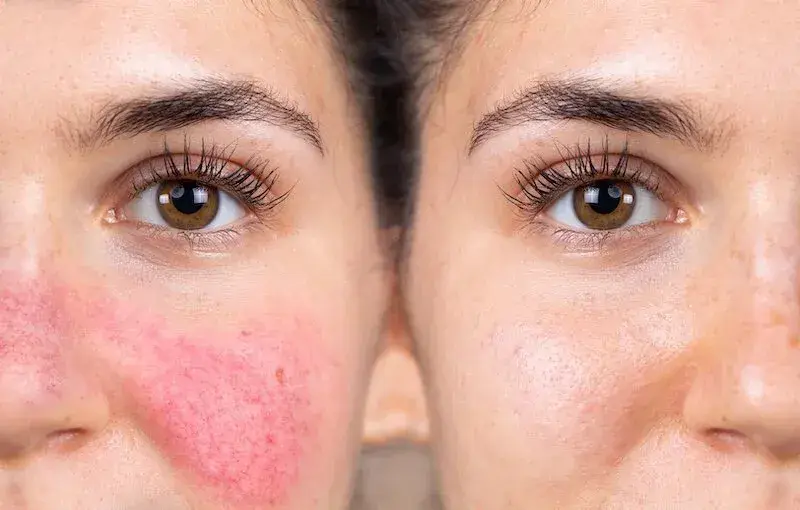
As April marks Rosacea Awareness Month, it is an opportune time to shed light on a prevalent skin condition that affects millions of individuals worldwide. Rosacea, while common, often goes undiagnosed, leaving many to navigate its challenges without proper understanding or management. This lack of awareness can significantly impact an individual’s self-esteem and overall quality of life. At Evolutionary Skin, we believe in empowering our community with the knowledge and solutions necessary to achieve healthy, comfortable skin.
What is Rosacea?
Rosacea is a common, chronic inflammatory skin condition characterized by periods of flare-ups and remissions. While the exact cause remains unknown, it typically affects the central areas of the face, including the cheeks, nose, chin, and forehead. Commonly observed symptoms of rosacea include:
- Frequent Facial Flushing that can get worse over time
- Small, visible blood vessels on the skin’s surface, known as telangiectasia or spider veins, particularly around the nose and cheeks
- The appearance of small, red, solid bumps (papules) and pus-filled pimples (pustules) is also characteristic of rosacea and can often lead to confusion with acne. A key distinguishing factor is that rosacea lesions typically do not present with blackheads (comedones), which are common in acne.
- Burning/Stinging Sensations and Skin Sensitivity
- Eye Issues (Ocular Rosacea) like dryness, grittiness, blurriness
- In Severe cases, thickening of the skin called Rhynophyma
To better understand the varying ways rosacea can manifest, the National Rosacea Society (NRS) has classified the condition into four main subtypes.
Not sure where your skin should start?
Answer a few questions and I'll point you to the right next step.
Take the skin quiz